Films
Over the last 42 years I have made 29 films, mostly on art. I was introduced to filmmaking by Charles Eames who invited me to co-direct two films with him, “Daumier, Paris and the Spectator,” 1976, and “Cézanne, the Late Work,” 1977. From Charles I learned a way of looking and filming that has greatly influenced me. Over the years I have had other fruitful collaborations, most notably with Richard Leacock and Ned Burgess as cinematographers, Alexandra Anthony, James Rutenbeck, Nicole Serres, and Erika O’Conor as editors. For the last twenty five years I have worked with composer John McDonald for the music in most of my films. It has been a most fruitful collaboration.
My early experience as a dancer effected my approach to filming art— the sense of movement, of rhythm, of what can be conveyed without words. ln making films on art, you have to confront the stillness and silence and consider what the film might give back that makes such transgressions supportable.
In recent years I have turned my attention to films on the history of ideas in early 20th century Europe. In 2011 I made a film on my father, “Nahum Glatzer and the German Jewish Tradition.” “The Passages of Walter Benjamin”, on the literary and cultural critic’s study of the 19th Century Paris Arcades was completed at the end of 2014. In 2016, I made “Aby Warburg: Metamorphosis and Memory” the cultural and art historian. “Svetlana Boym: Exile and Imagination” on the Russian born cultural and literary critic, was completed in 2017 and “Isaiah Berlin: Philosopher of Freedom” in 2018.
My films are archived at the Harvard Film Archive and some at the Louvre in Paris.
Isaiah Berlin: Philosopher of Freedom
72 min. 2018.
The film traces the intellectual development of Isaiah Berlin (1909-1997) a leading thinker in the context of his life and times, through archival film and recordings of its subject, as well as interviews with his biographer Michael Ignatieff, his principal editor Henry Hardy, and pianist and writer Alfred Brendel, and others.
After Isaiah Berlin’s encounter with Russian poet Anna Akhmatova in 1945, he shifts from analytic philosophy to the history of ideas and develops his concepts of Liberty. Berlin and others speak of his other principle works: “The Hedgehog and the Fox”, his study of Tolstoy; Alexander Herzen, Romanticism.
The film had its premiere at Wolfson College, Oxford University, followed by screenings at Harvard, Yale, Princeton, and elsewhere.
Distributed by Kanopy.
Comments
“…a brilliant, deeply revealing account of one of the truly great minds of the twentieth century. We… are deeply in your debt for bringing him, his ideas and his times to life with such cinematic skill and penetrating discernment.”
— Orlando Patterson, Professor of Sociology, Harvard
“There is so much to appreciate in Judith Wechsler’s lovingly drawn portrait of Isaiah Berlin: the richness of the visuals and the nonverbal storytelling, the wonderful musical choices, the gem-like archival materials, and the seamless way the entire film has been knit together. The section on Berlin’s storied meeting with the great poet Anna Akhmatova is alone worth the price of admission, as they say. Overall, Berlin’s extraordinary life and work sparkle against the backdrop of a century whose darkness he witnessed firsthand.”
— Jeremy Eichler, music critic, Boston Globe, and Shostakovich scholar
“I much admired it. It could have been twice as long. …I was moved and exhilarated.”
— Alfred Brendel, pianist and writer
“I loved it! The balance between Berlin’s own words and those of others you interviewed was excellent and you portrayed the man, his ideas, and his context with great clarity and sympathy. His pluralism is such a welcome antidote to the tone of our public sphere today.”
— Ann Blair, Professor of History, Harvard
“A masterful work: sober, profoundly moving, historically comprehensive, intellectually suggestive at every turn — and consistently beautiful and often amusing to look at and listen to. The layering and dynamic configuration of the imagery, the rich visual-aural dimensions, complementing the wonderful characterizations and the interesting commentaries — The sections on Akhmatova are especially wonderful. Really memorable.”
— Howard Eiland, co-author Walter Benjamin. A Critical Life.
“It is an excellent introduction to IB’s life and thought, and insight into his personality, for the newcomer — while offering much to savor for the Berlin aficionado… You do a remarkably good job of managing to touch on all of the high-points in a short time-span. Technically, the film is superb. The matching of images to the narrative, which brings to accurate and authentic …visual life scenes…is particularly thrilling; and the choice and matching of music, too.”
— Joshua Cherniss, co-editor, The Cambridge Isaiah Berlin Reader
Svetlana Boym: Exile and Imagination
60 min. 2017.
This one hour documentary film is about the life and work of Svetlana Boym, literary and cultural critic, media artist, novelist and playwright. In 1980, age 21, Svetlana left the USSR for the US, unable to pursue studies at the Leningrad university because of the Jewish quota. After graduate studies at Boston University and Harvard, she became the Carl Hugo Reisinger Professor of Slavic and Comparative Literature at Harvard.
A brilliant writer of ambitious scope and great imagination, combining personal memoir with philosophical essay and historical analysis, she explored motifs of exile, nostalgia, the diasporic imagination and different forms of freedom in Pushkin, Dostoevsky, Nabokov, Mandelstahm, Akhmatova, Brodsky, and many others, in a total of six books, with two more about to appear.
Through videos of her lectures and interviews, together with photographs since her childhood, and her own photographs, and photomontages, we convey this remarkable person and her scholarly, critical, and artistic contributions. Interviews with family, teachers, colleagues, students and friends, including writer Masha Gessen and artist Vitaly Komar, provide different perspectives. The text of the film is, for the most part, drawn from her writings.
Exuberant, ironic and witty, Boym was a charismatic critic and teacher until her untimely death from cancer, summer of 2015, at age of 56, after nearly a year long struggle.
Distributed by Kanopy.
Premiere at Harvard University.
Project photos


Click on any photo above to view enlarged version.
Comments
“I am moved almost beyond words. You have created a beautiful, evocative portrait of Svetlana, and at the same time a serious examination of her thought and work. BRAVA! This is not only a beautiful memorial to Svetlana but a wonderful film! Even those who didn’t know her or of her will find it compelling.”
— Susan Suleiman, Prof. Comparative literature, Harvard University
“Exile and Imagination represents a vivid and profound exploration of the interior and external journeys of Svetlana Boym, a writer and Jewish refugee who immigrated to the United States from Russia where she not only confronted but embraced another culture with lucid creativity and scholarly passion. The filmed story of her life from childhood to her death, glows like a beacon of courage. An inspiring gift for all those who are confronting their own cultural and intimate frontiers.”
— Rudolph Wurlitzer, writer
“I was completely enthralled. This is not only a remarkable portrait of Svetlana Boym, but an object of reflection for so many of us who grew up in a country where we did not feel at home and felt compelled to remake ourselves elsewhere… moving as a knight does, always off center. You do great justice to your subject, yet absent yourself from the film – off to the side, as it were, yet present in the artistry and devotion that is felt in every frame.”
— Michael Jackson, Professor, Divinity School, Harvard University
“The movie is wonderful and paints Svetlana in a beautiful way, as a mind and as a person. The spectator falls in love with the whole of her, thanks to you.”
— Florence Dumora, Professor of Comparative Literature, Université Paris-Diderot
“I found it utterly captivating. Her lasting contribution to culture, I’m tempted to believe, was her complex and ongoing self-invention — which you trace so fascinatingly.”
— Donald Fanger, Prof. Slavic Literature, Emeritus, Harvard University
“Thank you very much for this fantastic contribution in the name and for the memory of Svetlana!”
— Vitaly Komar, artist
THE PASSAGES OF WALTER BENJAMIN.
55 min. 2014.
In 1933, Walter Benjamin, one of the most brilliant literary and cultural critics of his time, fled Berlin when the Nazis took over and headed for Paris. There he sat, at the Bibliothèque nationale, working in poverty and relative obscurity on his most important project, “The Arcades Project.”
With the backdrop of totalitarianism spreading across the European continent, Benjamin explored the origins of modernity. Praising the poet Charles Baudelaire and employing his emblematic characters, especially, the flâneur and the rag picker, Benjamin wanted to counter the “false semblance of totality.” This enormous incomplete study is both a collection of sources for a radical history of 19th century Paris and the basis for an allegorical critique of European fascism in the 1930s.
What Benjamin sought was “images, not stories.” Stories were too complete for him; by contrast, images could be recombined, or recomposed, into a montage. Thus he was a fan of documentary film which could create the surprising and revealing juxtapositions he was after.
In 1940, as the Nazi armies invaded Paris, Benjamin gave over his Arcades notes to the writer George Bataille who hid them in the Bibliothèque nationale and fled.
Benjamin was interned in 1939 as an enemy alien and suffered from a heart condition. Despite his weakened condition, the only way out was to cross clandestinely over the Pyrenees to Spain on what should have been the way to the United States via Portugal. He carried a brief case that contained a manuscript he described as “more important than my life.” Refused at the border, his visa not recognized, and about to be turned over to the Gestapo, Benjamin took the morphine he had been carrying in his pocket, and committed suicide.
The material he carried with him was lost but over a thousand pages of notes for the major work of his life were recovered from the Bibliothèque nationale after the war. The “Arcades Project,” published in an English edition in 1999, is one of the most brilliant interpretations of early modern life.
This film presents the “The Arcades Project” in the context of Benjamin’s life and times. True to the spirit of Benjamin, “fragments” from his life and work in the 1930s are points of entry to explore his wider biography, from his family and childhood in Berlin, to his unconventional education, his travel to Moscow, and his life in exile in Paris. The film addresses Benjamin’s concerns as a German-Jewish intellectual, his friendships, and his failed romances.
The story is told, as much as possible, through Benjamin’s own writings, his correspondence, and quotations from The Arcades Project. The film incorporates footage and photographs of nineteenth and twentieth-century Paris, particularly the arcades, interviews with leading scholars, photographs of Benjamin, his family and associates, his handwritten manuscripts, notes, letters, and his flight from France to Port Bou Spain where he ended his life. Benjamin scholars are interviewed among them Howard Eiland, Susan Buck-Morss, Sigrid Weigel.
Walter Benjamin has wide and deep influences in many fields as a foremost intellectual of the 20th century. This one hour documentary should engage anyone interested in European culture and its fate in the 1920s to 1940s.
Please contact Judith Wechsler for appearances, screenings and DVDs.
Distributed by Kanopy.
Comments
“How moved I am while watching your film. And I’m sure Benjamin himself would have been moved too, because it is a very Benjaminian achievement: the way you’ve orchestrated and concentrated so much—biography, twentieth-century history, cultural analysis, and sheer pictorial abundance—into a short space of time. The visuals, the audio-visual montage, the music, the overall pacing of the story and its branchings—all are brilliant. And produced with maximum succinctness and crystalline precision, with nothing lax or superfluous. You and your colleagues have done a really wonderful job!”
— Howard Eiland, co-author of Walter Benjamin, A Critical Life, Co- translator of The Arcades Project.
“Absolutely beautiful, absolutely intelligent, and true to the sensibility of the Arcades project. ”
— Susan Buck-Morss, author of Dialectics of Seeing, Walter Benjamin and the Arcades Project.
“I was engrossed immediately. The final images brought tears to my eyes; that insane and brutal history, so beyond belief, so impossible to come to terms with, ever. But how beautifully you bring back to life the arcades, the bric-a-brac, the detritus of the everyday, and make it reveal, as Benjamin also did, a larger picture. Even he comes alive again in these delicately phrased quotations from his notebooks. As for the music and voiceovers – so unobtrusive, poignant and respectful ….They abet our empathic entry into these other worlds, and it is as if we see them for the first time as contemporary, as inhabited by us.”
— Michael Jackson, Poet and anthropologist, Professor of comparative religion, Harvard University.
“A rare probe into the developing mind of a giant. I will have to see it again, many times. Almost every image and quotation, and certainly the succession of a few at a time, convey a mixture of fascination and urgent question. ”
— Gerald Holton, Professor history of science, Harvard University.
“I was moved to tears. It was wonderfully and elegantly filmed in its visual and written rhythms, and always intensely haunting and compassionate inside the display and life journey of an extraordinary being.
A deeply felt and original film that will be an important contribution to philosophy, literature and life itself.”
— Rudolph Wurlitzer, novelist and screenwriter.
“The film is incredible; I’m staggered to visualize the enormous research involved in the gathering of every kind of image and putting in just the right one in the right place, finding the experts. I hope you can get an academy nomination.”
— James Ackerman. Professor Emeritus, Art history, Harvard.
Photos and documents related to the project


Click on any photo above to view enlarged version.
ABY WARBURG: METAMORPHOSIS AND MEMORY.
60 minutes. 2016.
Aby Warburg, (1866-1929), an art historian of startling originality, came from the renowned Warburg banking family of Hamburg, Germany. Already in his teens, the first of seven children, he made a deal with his next oldest brother to forfeit his birth right to take over the family bank in exchange for full financial support in buying all the books that he would ever want. The library he assembled would become a refuge of scholarship. In 1933, with the Nazi takeover and the deprivation of Jewish rights, 60,000 books, photographs, and papers were shipped to London to become the Warburg Library and Institute eventually housed at the University of London.
This documentary on the life and work of Aby Warburg, traces the development of his ideas in their historical context. From his early studies on the early Italian Renaissance to his ventures in the American Southwest observing Hopi and Zuni ritual dances in 1895, Warburg sought the legacy of ancient Greece in the images and symbols of cultures, which he followed through iconographic studies that he pioneered. He sought connections between gesture and art in antiquity, the Renaissance and modern times. Underneath the seeming rationality of antiquity and the Renaissance, he sensed conflict and irrationality.
Aby Warburg never took an academic position but pursued his interests and collection of books with passion. Recurrent depressions lead to hospitalization in a psychiatric clinic in Switzerland 1921-1924. For the last five years of his life, he gave occasional lectures and seminars, but publishing almost nothing. Most notably, he developed a picture atlas, Mnemosyne, (the personification of Memory in Greek mythology,) consisting of 60 wooden panels with some 1000 images arranged according to themes and juxtapositions, concerning memory, astrology and mythology, archeology, migration of the ancient gods, vehicles of tradition, irruption of antiquity, Dionysiac formulae of emotions, Nike and Fortuna, Durer, the baroque, the reemergence of antiquity, Manet, the classical tradition today.
The principal motifs of Warburg’s scholarship are discussed by leading art historians in England, US and Germany, including Professors Michael Diers, Uwe Fleckner, David Freedberg, and Joseph Koerner. Filming took place in London and Hamburg.
This film should appeal to anyone interested in the history of ideas, art history, social and cultural history.
Please contact Judith Wechsler for appearances, screenings and DVDs.
Distributed by Kanopy.
Comments
“It’s a wonderful film, marvelously put together, beautifully sensitive to the man and to the work.”
— David Freedberg, Former Director, The Warburg Institute.
Professor of art history, Columbia University
“So touching and daunting, so deep. The traversing (within and from) timed to its own perfection and yet at the same time alive to the imperfections that attended upon so much, in the times, in the persons, in the hopes. ”
— Christopher Ricks. Literary critic. Professor, Boston University
“A brilliant and moving contribution to anthropology and art history, as well has given me a new and inspirational resource for deepening my own reflections on art and historicity. …
What an enormous amount of research and thought has been poured into this labor of love. For me it has paid off brilliantly - in a spate of edifying insights and new paths for thinking that no book could have given me.”
— Michael Jackson, Professor, Harvard Divinity School
“Just watched your amazing Warburg film. It left me dazzled and melancholy. He was not like any other scholar the world has ever known. You managed to create a sense of the richness, indeed excessive richness of his ideas and yet keep the strands straight.”
— Linda Nochlin, Professor Emeritus of Art History, Institute of Fine Arts, NYU
“Magnificent. A masterly film, an exposition of the possibility of desperate yet energizing internal contradictions in a person and in culture, and above all deeply moving experience.”
— Gerald Holton, Professor History of Science, Harvard
“It is very simply a triumph. A visual-musical-intellectual feast. The audio-visual montage is masterly. The story of his life told beautifully and succinctly…. Truly moving to watch, indeed riveting.”
— Howard Eiland, Co-author Walter Benjamin: a Critical Life
“…visualized intellectual history at its very, very best. The experts won´t be disappointed and the newcomers or a lay audience will be gripped by a compelling portrait that neither fails to present Warburg’s thriving forces, his organizing concepts and ideas, nor the historical and biographical contexts…. You succeeded in producing a miracle. ”
— Martin Bauer, Editor, Journal for the Hamburg Institute for Social Research
“Brilliant—acutely intelligent, hauntingly and harrowingly moving, and so beautifully “collected” in its vision of that extraordinarily luminous, oracular conduit.”
— George Kalogeris. Poet, Classicist




Nahum Glatzer and the German-Jewish Tradition.
60 minutes. 2011.
Nahum N. Glatzer (1903-1990), was a noted Judaic scholar who exemplified scholarly integrity and the revivification of Judaic studies. The film explores the context of German-Jewish learning in which Glatzer developed and the theological, literary and philosophical worlds to which he contributed. A foremost disciple of the philosopher Franz Rosenzweig, Glatzer succeeded Martin Buber at the University of Frankfurt in the sole position in Jewish studies in Germany. Nahum and Anne Glatzer immigrated to Palestine in 1933 and then to the US in 1938, where he served as editor-in-chief of Schocken Books and presented among the first English editions of the work of Franz Kafka. Glatzer was the author of studies on Rosenzweig, Buber, Jewish history, midrashic literature, Wissenschaft des Judentums, and the connection between the Book of Job, the motif of the Tree of Knowledge, and Kafka’s writings. Glatzer went on to develop the Department of Near Eastern and Judaic Studies at Brandeis, which became the prototype for departments across the US. The film explores his life as a paradigm of movement from culture to culture and an emblem of what lives on in the transition, influencing many students and training a generation of Judaic scholars.
The film includes Glatzer lecturing, segments of an interview with him, interviews with former students and colleagues among them Professors Michael Fishbane, Everett Fox, Susanna Heschel, Paul Mendes-Flohr, Hilary Putnam, Bishop Krister Stendahl, as well as letters, photographs and documents.
Distributed by the National Center of Jewish film.
Comments
“The film is fabulous!!!! I love it! Just amazing.”
— Suzanna Heschel
“The life of an exemplary scholar and teacher — presented with artistic nuance, historical detail, and loving devotion.”
— Michael Fishbane
“A truly magnificent film on the life of Nahum Glatzer. Captures both him and the German-Jewish intellectual heritage beautifully. Should not be missed!”
— Arthur Green
“Beautifully done. Deftly conveys a portrait of Glatzer, through the events through which he lived and how he navigated them as a scholar and as a committed Jew.”
— Everett Fox
“The film is exquisitely crafted and a deeply moving — and instructive — homage to Nahum Glatzer.”
— Paul Mendes- Flohr
“It is excellent. I thought it beautifully filmed and shaped. My valuing it has much to do with its judging with such imaginative accuracy its kind: a tribute, a memorial, not a biography: a tribute to and a memorial of not only a remarkable man but a remarkable tradition within scholarship.”
— Sir Christopher Ricks, Professor, Boston University
“It moved me to tears…There is a wonderful intimacy and tranquility about your film that also affected me deeply, that draws the watcher in and makes him attentive to every detail.”
— Michael Jackson, Professor, Divinity School, Harvard
Photos and documents related to Nahum Glatzer


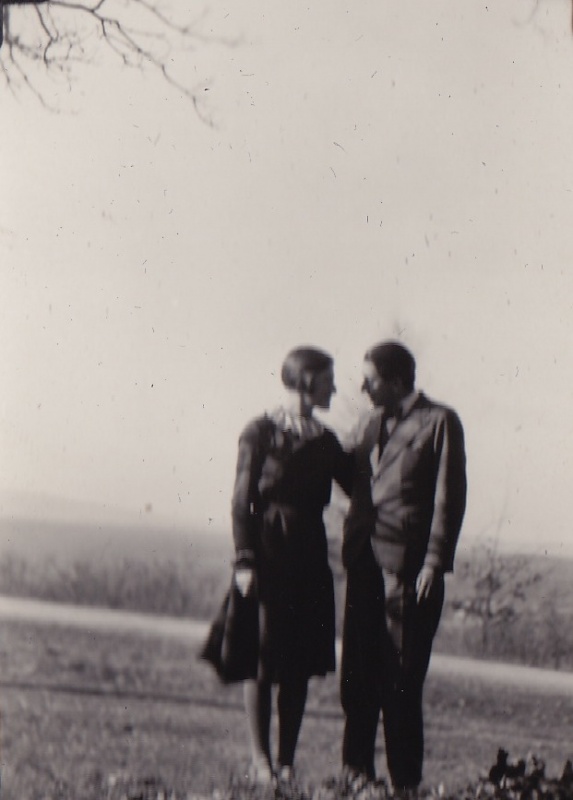


Click on any photo above to view enlarged version.
Selected Film Links
Excepts from the following films are available to view online. For a complete list of Judith Wechsler’s films see her CV. If you’d like more information about a particular film you can contact her directly.
-
 2006
2006 -
 2003
2003 -
 1999
1999 -
 1996
1996 -
 1990
1990 -
 1999
1999 -
 1991
1991 -
 1994
1994 -
 1985 - 1989